West Asia Shipping Disruptions: What Small Indian Exporters Should Check Before Confirming an Overseas Order
For small Indian exporters, securing an overseas order is an important business milestone. However, confirming an order without checking shipping conditions, freight costs, transit times, and delivery risks can affect profit margins and customer relationships.
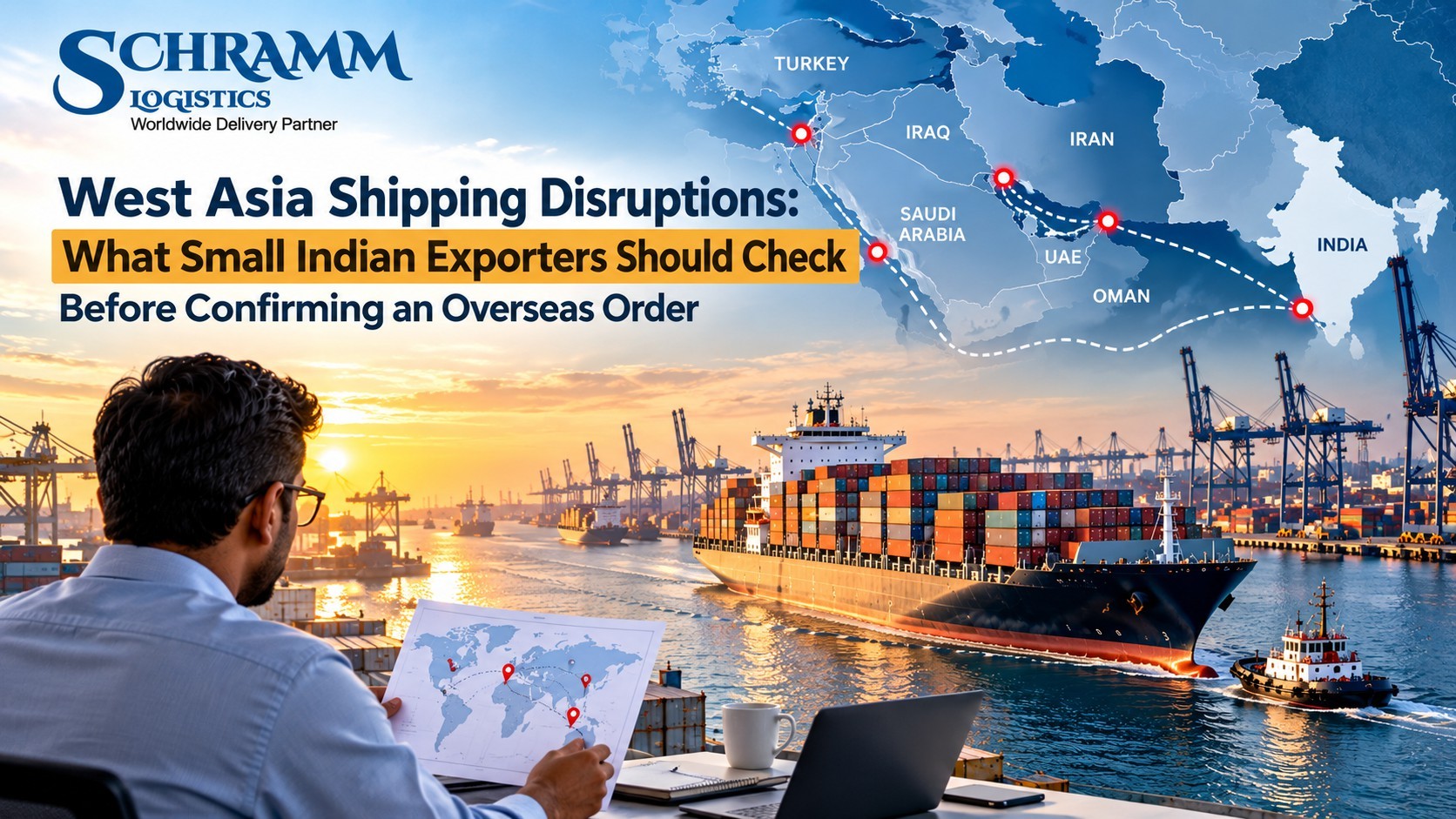
Shipping disruptions in West Asia can create uncertainty for international trade routes, particularly shipments moving through or near strategically important maritime corridors. Depending on the route and prevailing conditions, exporters may face schedule changes, longer transit times, revised freight rates, additional insurance requirements, or delays in cargo movement.
For small and medium-sized businesses, even a short delay can affect working capital, production schedules, and delivery commitments.
Before confirming an overseas order, Indian exporters should evaluate more than just the product price. They should understand the logistics involved, identify potential risks, and coordinate with their freight forwarding partner.
At Schramm Logistics, we understand the importance of reliable freight forwarding, export documentation, customs clearance, and shipment planning in international trade. Here are the key checks small Indian exporters should complete before accepting their next overseas order.
1. Check the Shipping Route and Transit Time
The first step is to understand how your shipment will travel from India to the destination country.
Depending on the destination and carrier network, cargo may move through different ports, transshipment hubs, or maritime corridors. Disruptions can lead to route changes, vessel schedule adjustments, or longer transit times.
Before confirming an order, exporters should check:
- The proposed shipping route and destination port.
- Whether the shipment requires transshipment.
- The latest vessel schedule and estimated transit time.
- The possibility of route changes or port congestion.
- Whether the buyer can accommodate a revised delivery window.
Avoid promising a fixed delivery date based only on a standard transit-time estimate. Confirm the latest available schedule with your freight forwarder and leave a reasonable buffer for unexpected delays.
2. Recalculate Freight Costs and Your Profit Margin
International shipping costs can change when carriers revise schedules, adjust routes, or introduce additional charges.
For small exporters working with tight margins, these changes can directly affect the profitability of an order.
Before confirming the final price with your overseas buyer, review:
- Ocean or air freight charges.
- Fuel, security, congestion, or other applicable surcharges.
- Origin and destination port handling charges.
- Customs clearance and documentation costs.
- Inland transportation and warehousing expenses.
- Potential demurrage, detention, or storage charges.
Ask your freight forwarding partner for a detailed quotation and clarify which charges are included, which are variable, and which may be payable at the destination.
Practical tip: Calculate your expected profit using a realistic logistics cost estimate rather than relying only on the lowest freight quotation available.
3. Confirm Delivery Terms and Incoterms
Incoterms help buyers and sellers understand their respective responsibilities for transportation, costs, delivery, and certain risks associated with a shipment.
Choosing the right Incoterm is particularly important when shipping conditions are uncertain.
Before accepting an overseas order, confirm:
- Who will arrange the main transportation.
- Who will pay freight and applicable destination charges.
- Where delivery responsibility transfers under the agreed term.
- Who will arrange cargo insurance, where required by the contract.
- Whether the agreed delivery term is suitable for the destination and shipment plan.
For example, under FOB, the seller generally delivers the goods on board the vessel at the agreed port of shipment, while the buyer arranges the main carriage. Under CIF, the seller arranges and pays for carriage and the required insurance to the named destination port, subject to the Incoterms rules.
These terms have specific requirements, so exporters should clearly state the applicable Incoterms rule and named place or port in their sales contract.
Do not assume that choosing an Incoterm automatically resolves every risk related to shipping delays, additional charges, or cargo insurance.
4. Review Cargo Insurance and Coverage Exclusions
Cargo insurance can help protect an exporter's financial position if goods are lost or damaged during covered transit events. However, coverage varies according to the policy, route, cargo, and applicable exclusions.
Where shipping conditions are uncertain, exporters should review their insurance arrangements before dispatch:
- Whether the cargo is insured for the full agreed value as intended.
- Whether the policy covers the planned route and mode of transport.
- Whether war, strikes, riots, or other relevant risks are excluded or require additional cover.
- Whether the policy contains geographic restrictions or special conditions.
- What documents and notifications are required if a claim arises.
Do not assume that a standard marine cargo policy automatically covers every consequence of a regional conflict or shipping disruption.
Ask your insurer or insurance adviser to confirm coverage for the specific shipment and route before committing to dispatch.
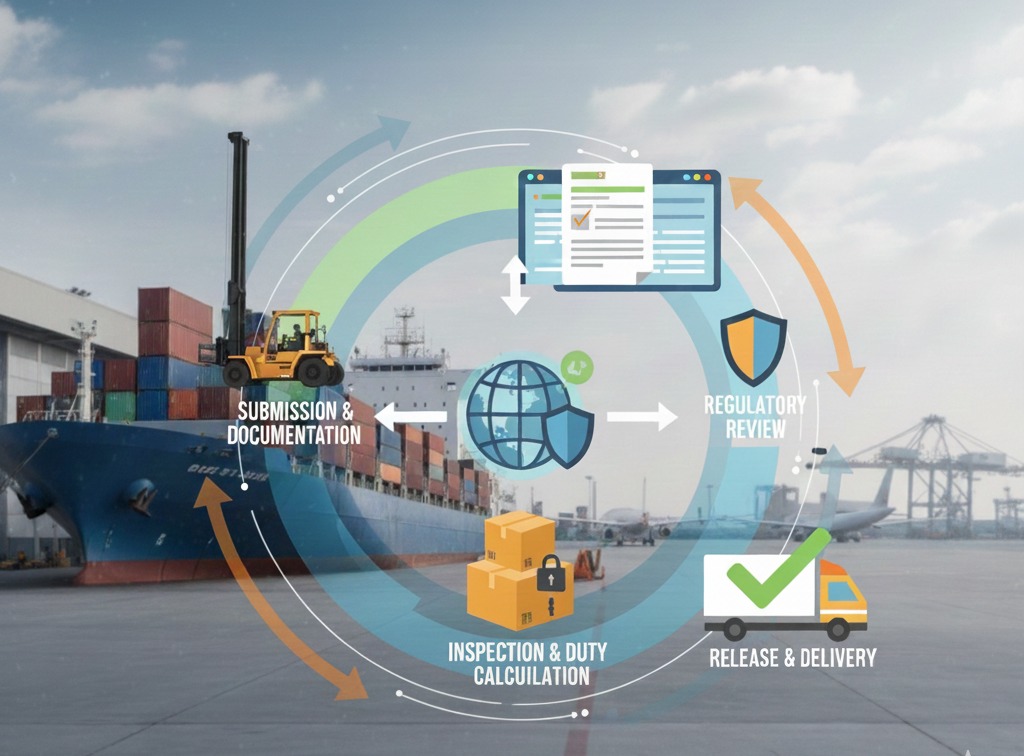
5. Verify Export Documentation and Customs Requirements

Shipping delays can become more difficult to manage when documentation is incomplete or inconsistent.
Indian exporters should prepare the required paperwork early and ensure that the details match across commercial, transport, and customs documents.
Depending on the shipment and applicable requirements, documents may include:
- Commercial invoice.
- Packing list.
- Shipping Bill.
- Bill of Lading or Air Waybill.
- Certificate of Origin, where required.
- Product-specific certificates, licences, or permits.
- Applicable export declarations and supporting documents.
Also verify the product's HS code, destination-country import requirements, labelling rules, and any restrictions that apply to the goods.
For agricultural, food, engineering, chemical, or other regulated products, additional documentation or approvals may be necessary.
Working with an experienced freight forwarder and customs clearance partner can help exporters identify documentation gaps before cargo reaches the port.
6. Check Buyer Reliability and Payment Terms
Shipping uncertainty can increase the financial pressure on small exporters, particularly when payment depends on delivery, document presentation, or buyer acceptance.
Before confirming a large or time-sensitive order, assess the commercial risk as well as the logistics risk:
- The buyer's payment history and creditworthiness.
- Whether an advance payment or letter of credit is appropriate.
- The payment due date and currency exposure.
- What happens if shipment or delivery is delayed.
- Whether the sales contract explains responsibility for additional costs.
- Whether the buyer accepts a realistic delivery window.
Where possible, avoid committing substantial production and shipping expenses without a clear payment arrangement.
Exporters should also ensure that any contractual clauses dealing with delays, force majeure, or changes in shipping arrangements are reviewed appropriately.
7. Compare Sea Freight and Air Freight Options
When a shipping route is disrupted, the best transport option depends on the cargo, delivery deadline, product value, and available capacity.
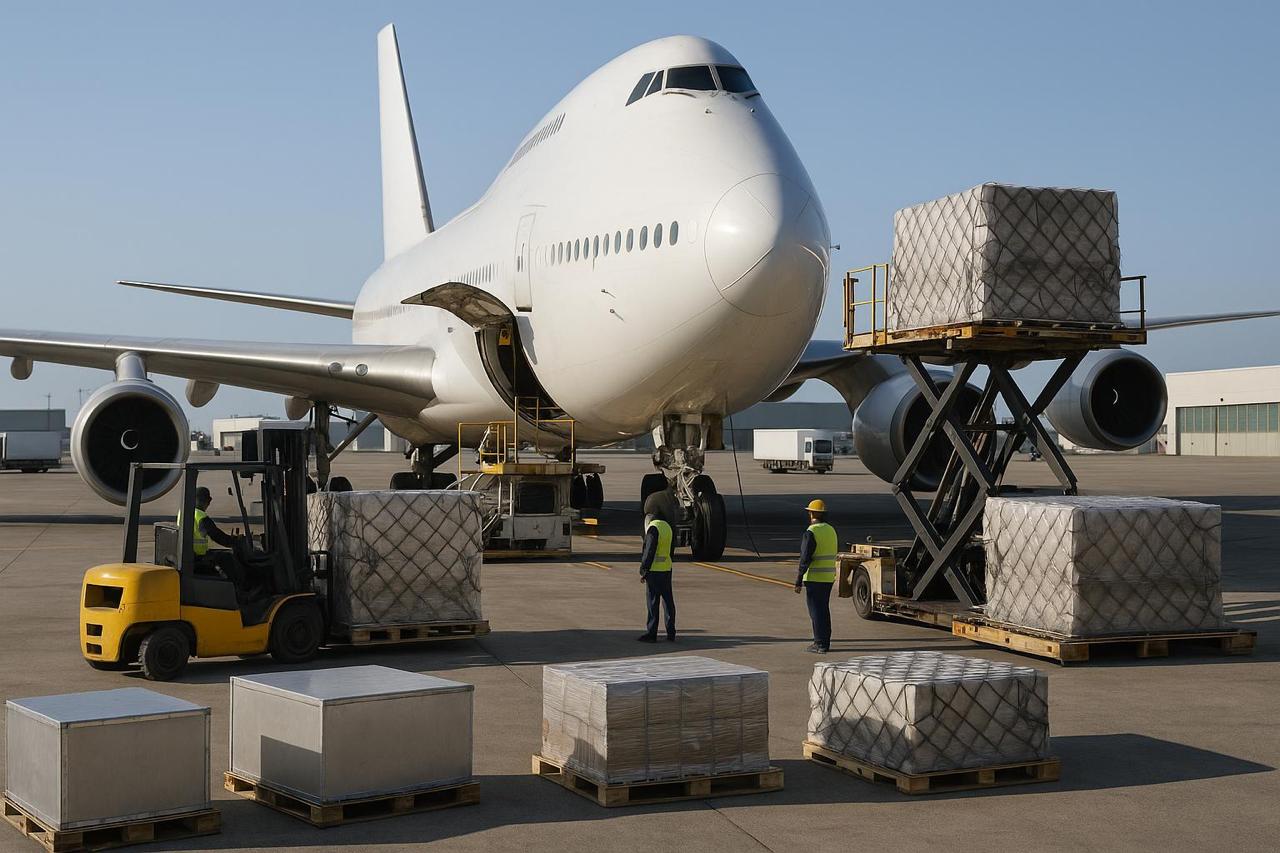
Sea freight is often suitable for larger or less time-sensitive consignments. Air freight may be worth evaluating for urgent, high-value, or lightweight goods, although it can be considerably more expensive and may also experience capacity constraints or schedule changes.
Before deciding, compare:
- Total transportation cost.
- Expected transit time.
- Cargo size, weight, and handling requirements.
- Availability of carrier capacity.
- Insurance and destination handling expenses.
- The financial impact of a delayed delivery.
For urgent orders, calculate whether the additional cost of air freight is justified by the value of meeting the deadline.
Schramm Logistics supports businesses with freight forwarding options that can help them evaluate suitable transportation arrangements for their shipment requirements.
8. Keep a Contingency Plan Before Dispatch
A shipping plan should include an alternative approach if the original schedule changes.
Small exporters do not necessarily need an elaborate risk-management system. A clear checklist and regular communication with their logistics partner can make a meaningful difference.
Before confirming an order, identify:
- An alternative sailing or service, where available.
- A realistic delivery buffer.
- A backup transportation option for urgent cargo.
- A contact responsible for communicating shipment updates.
- A process for informing the overseas buyer about schedule changes.
- The financial impact of a delay or rerouting.
Ask your freight forwarder to communicate material changes in vessel schedules, routing, or estimated arrival times as soon as reliable information becomes available.
Proactive communication gives exporters and buyers more time to adjust inventory, production, and delivery plans.
9. Create a Pre-Order Shipping Checklist
Before accepting an overseas order, use the following checklist to confirm that the shipment is commercially and operationally viable.
Completing these checks before accepting an order can help reduce avoidable surprises and support better export decisions.
How Schramm Logistics Can Support Your Export Shipments
For small Indian exporters, international shipping involves more than booking space on a vessel. It requires coordination between transportation, documentation, customs clearance, shipment schedules, and delivery expectations.
Schramm Logistics provides logistics support designed to help businesses manage these requirements, including:
- Sea freight and air freight forwarding.
- Customs clearance and related documentation support.
- Export-import (EXIM) assistance.
- Warehousing and cargo handling coordination.
- Shipment planning based on cargo and destination requirements.
Our team can help exporters review their logistics requirements and understand the practical considerations involved before confirming an overseas order.
Conclusion
West Asia shipping disruptions highlight why small Indian exporters should assess logistics risks before confirming an overseas order. Freight costs, shipping routes, delivery commitments, insurance coverage, export documentation, and buyer payment terms all influence the final outcome of an international shipment.
A well-planned order gives exporters a clearer view of their costs, responsibilities, and contingency options. By checking these factors early and working with a reliable freight forwarding partner, businesses can make more informed decisions and manage international shipments more confidently.
Shipping schedules, freight rates, route availability, and insurance terms can change. Confirm shipment-specific details with your carrier, freight forwarder, insurer, and relevant authorities before making commercial commitments.
Website: www.schrammlogistics.com
Email: info@schrammlogistics.com